
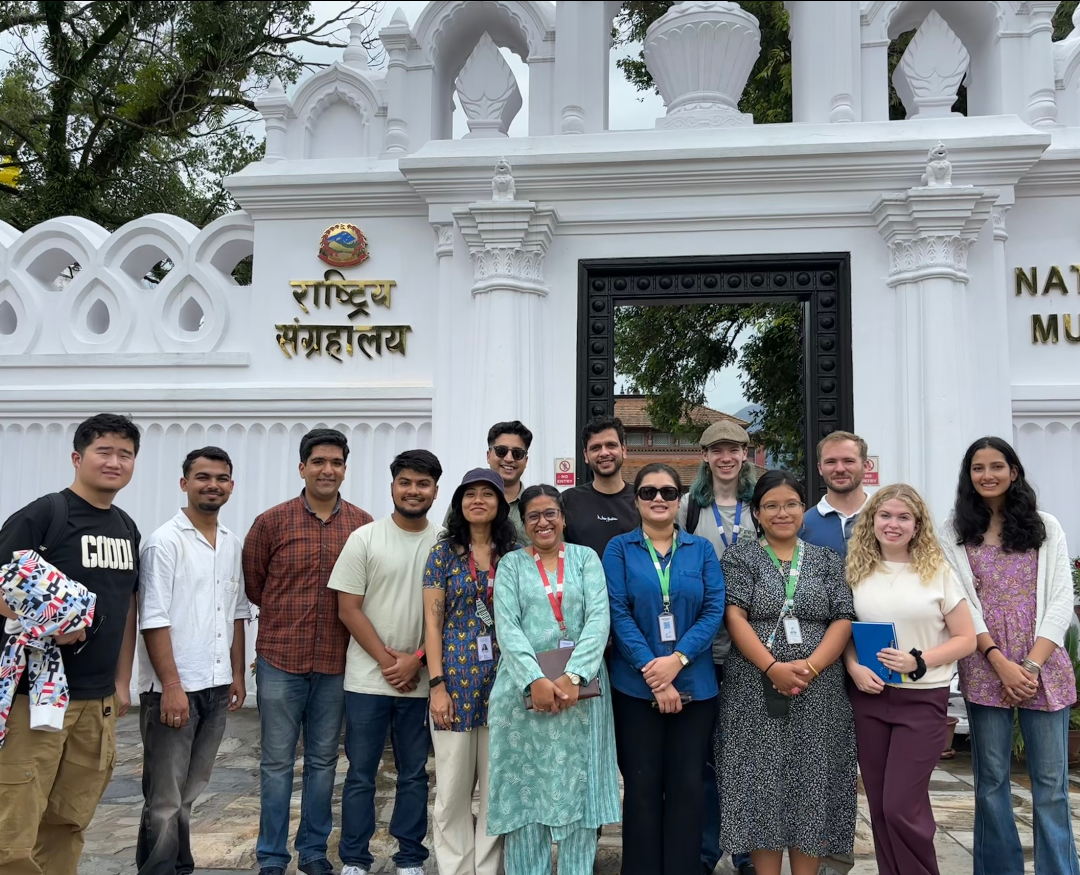
Nina Appicello and Erik Fagerstorm | Monday, 20 July 2026
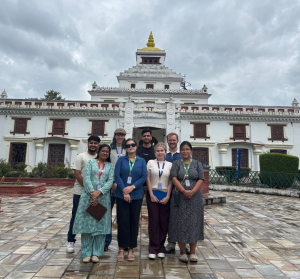
[Pictured: Group Photo in Museum Courtyard]
Overview
On Monday, 20 July 2026, IIDS fellows visited the National Museum of Nepal in Chhauni, Kathmandu. Established in 1928 as an arsenal collection known as the Chhauni Silkhana and opened to the public a decade later, it is the country’s oldest and most significant museum. The visit covered all three buildings on the museum grounds: the Juddha Jatiya Kalashala (the main art gallery), the Buddhist Art Gallery, and the original Historical Museum Building. Together, the three collections trace Nepal’s artistic, religious, and political history from the Licchavi period to the present.
Building 1: Juddha Jatiya Kalashala (Art Gallery)
The first building, named after Prime Minister Juddha Shumsher Rana, who commissioned it, holds the museum’s core collection of Nepali art across five media: stone, bronze, wood, clay, and painting.
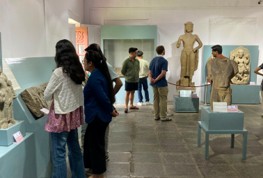
The stone sculpture gallery contains works dating to the 2nd and 3rd centuries CE, alongside Sanskrit inscriptions from the 6th and 7th centuries. These early pieces, largely from the Licchavi period, are among the oldest surviving examples of Nepali sculpture and show a level of technical refinement that set the standard for later work in the Kathmandu Valley.
The Bronze Art Gallery focuses on more recent work from the 19th and 20th centuries, dominated by Buddhist and Hindu religious imagery. The Painting Art Gallery displays traditional Nepali painting, and the wooden art section holds carved works from the 17th and 18th centuries. This section also includes photographs of traditional houses (ghars) featuring the same style of ornamental wood carving in their original architectural context, which was a useful reminder that these were functional building elements before they were museum pieces.
[Figure 1: Stone Sculpture Gallery in Art Gallery]
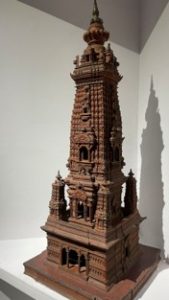
[Figure 2. Replica of Mahabuddha Temple in Patan, Nepal constructed from terracotta in Art Gallery]
Building 2: Buddhist Art Gallery
The second building, constructed with assistance from the Government of Japan and opened in 1997, is organized geographically by the regions of Nepal associated with Buddhism.
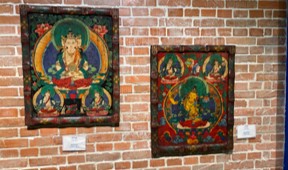
The Buddhist Art Gallery has been divided into three sections, the Southwestern Terai, the birthplace and palatial area of Lord Buddha, Kathmandu Valley, the center of Buddhism and Buddhist art of the high Himalayan range. The Terai section covers the southwestern Terai plains where the Buddha was born, at Lumbini. Its displays are dominated by painted pottery excavated from the region; There was notably red, gray, and black pigments on the vessels. Elsewhere in the gallery, gilded Buddha statues represent the high point of Nepali metalwork in religious art.
Two sections stood out. The first was the repatriation display, which presents sacred objects that were stolen and trafficked abroad before being recovered and returned to Nepal with the involvement of the Nepal Police. Given ongoing international debates about the restitution of cultural property, seeing repatriated objects displayed as a distinct collection was one of the most interesting parts of the visit. The second was the Mandala Gallery, which explains the structure of the mandala and displays the five Buddhas of the Buddhist pantheon.
[Figure 3. Buddha Paintings in the Buddha Art Gallery]
Building 3: Historical Museum Building
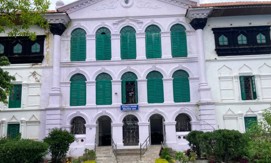
The third and oldest building, originally a 19th-century structure associated with General Bhimsen Thapa, houses the museum’s natural science and ethnographic collections. The natural science section displays animal species native to Nepal, and a doll gallery presents collectible dolls gifted from many countries.
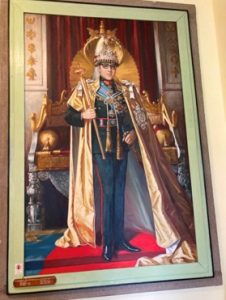
The ethnographic exhibits document Nepal’s caste and ethnic groups through costumed representations, alongside an exhibit on prehistoric humans in Nepal. Upstairs, the military and political exhibit traces the country’s martial and state history, connecting back to the museum’s origins as an arsenal. This section also displays formal portraits of the Shah kings in chronological order, from the dynasty’s founding through its final monarchs, offering a visual timeline of the royal line that ruled Nepal until the abolition of the monarchy in 2008.
[Figure 4. Historic Building Pictured]
[Figure 5. Portrait of King Birendra Bir Bikram Shah, ruled from 1972-2001]
Reflections
The visit was directly relevant to the IIDS’ focus on Nepal’s development. The museum presents a compact account of how Nepali identity has been built across religious traditions, ethnic communities, and political eras, which is useful context for policy work in the country. The repatriation section connects cultural heritage to current questions of governance and international cooperation. As a record of both artistic achievement and institutional history, the National Museum rewards a full morning visit.