
Diaspora Team Set 5

Alex Karki
Alex Karki is a civil engineer, transport specialist, and political advocate who exemplifies the dynamic and growing influence of the Nepali diaspora in Australia. Based in Sydney, he brings over a decade of experience in delivering major infrastructure projects, having served in technical leadership roles at Transport for NSW (Government of New South Wales) on transformative initiatives such as the Sydney Light Rail and Sydney Metro.
In March 2023, Alex made history as the first person of Nepali-origin to run as a Labor Party candidate for the New South Wales Parliament, contesting the seat of Kellyville. His grassroots campaign secured an impressive 12.1% swing in a traditionally safe Liberal electorate, marking one of the highest vote shares for a Labor candidate in the region’s history and laying the groundwork for future progress. Alex currently serves as the Vice-President of the Hills Labor Party in New South Wales, where he plays an active role in fostering community engagement, mentoring new members, and promoting inclusive policy development.
Alex holds a Bachelor of Civil Engineering (Honours) and a Research Master’s degree in Transport Engineering from the University of New South Wales (UNSW). His academic research focused on traffic behavior and road safety policy, reflecting his evidence-driven approach to infrastructure and public service. As the founder and Principal Traffic & Parking Engineer at Sydney Traffic Engineers Pty Ltd, he leads a boutique consultancy delivering evidence-based, community-focused solutions. His professional expertise spans sustainable mobility, road safety, and inclusive urban design, with a commitment to improving access and wellbeing across metropolitan and regional areas. In addition to his consultancy work, Alex is a Transport Columnist for Hills Sydney Digital Magazine and a former Urban Transport Specialist at URaP International, where he contributed to innovative, data-driven projects addressing urban development, renewable energy, and climate change resilience.
Alex remains an active mentor, community organizer, and advocate for multicultural inclusion. He supports a range of diaspora initiatives and champions stronger Australia–Nepal ties in areas of infrastructure, education, and civic leadership.

Prerana Shrestha
Prerana Shrestha, Ph.D., is a neuroscientist and Assistant Professor at Stony Brook University’s Department of Neurobiology & Behaviour in New York, where she leads a multidisciplinary lab investigating how protein synthesis in defined brain cell types supports learning, memory, and emotional regulation. With a career spanning over two decades in neuroscience research, her work focuses on understanding the molecular and cellular mechanisms underlying emotional behaviours and neuropsychiatric disorders.
Originally from Nepal, Prerana received her B.S. in Biological Chemistry from Bates College and completed a Ph.D. in life sciences at The Rockefeller University. Her graduate work explored gene-environment interactions in the brain. Using advanced techniques like translating ribosome affinity purification (TRAP), she identified key mechanisms regulating layer 2/3 pyramidal cells in the prefrontal cortex, providing insights into the link between stress and depression.
During her postdoctoral work at New York University’s Center for Neural Science, she developed novel chemogenetic approaches to selectively block nascent protein synthesis in specific neuronal cell types. This led to the development of cell-type-specific inducible protein synthesis inhibitors (ciPSI), uncovering how rapid neuronal translation supports long-term memory consolidation in the amygdala. Since joining Stony Brook University in 2021, Prerana’s lab has been elucidating protein synthesis dynamics in functionally coherent cell populations in healthy brains and in diseased brain states such as Tuberous Sclerosis Complex (TSC). She is deeply interested in understanding the molecular and cellular basis of learned and innate emotional behaviours, and how these are dysregulated in neuropsychiatric disorders. To achieve this, her team employs a multidisciplinary approach combining mouse transgenesis with state-of-the-art chemogenetics, pharmacology, biochemistry, proteomics, histology, imaging, and behavioural studies.
She has been recognised with numerous prestigious awards, including the Sloan Research Fellowship (2022), the NARSAD Young Investigator Award (2017–2020), and the Anuradha Rao Memorial Award (2019). She was also named a Molecular & Cellular Cognition Society (MCCS) Scholar and a Tianqiao & Chrissy Chen Travel Fellow. Her groundbreaking work has been supported by major grants, including a $2.2 million award from the National Institute of Mental Health (NIMH) to study psychological trauma. She continues to inspire as a researcher and mentor, helping shape inclusive and transformative spaces in neuroscience both locally and globally.

Rajesh Dhakal
Professor Rajesh Dhakal, PhD, is the Head of the Department of Civil and Environmental Engineering at the University of Canterbury, New Zealand. He is a global expert in Structural and Earthquake Engineering and is consistently ranked among the world’s top 1% of researchers in his field. Professor Dhakal earned his PhD in 2000 from the University of Tokyo. Prior to that, he completed a bachelor's degree in civil engineering from Tribhuvan University, where he was awarded a Gold Medal, followed by a master’s degree in Structural Engineering from the Asian Institute of Technology, where he received another Gold Medal.
Over the years, Professor Dhakal has become internationally recognized for his pioneering research in the modeling, analysis, and seismic design of concrete structures, as well as in strategies to reduce building damage and losses during earthquakes. His groundbreaking work on low-damage non-structural elements (i.e., architectural/service components such as ceilings, partitions, claddings/glazing, plumbing, and electricals) and the development of damage-avoidance design for structural systems has significantly advanced the seismic resilience of buildings. He has supervised more than 60 ME/PhD research students and published approximately 500 peer-reviewed publications, which have been read over 450,000 times, received more than 9,000 citations, and attracted over 1,000 academic recommendations. His research has secured over $7 million in funding and has earned him more than a dozen prestigious awards for research excellence. His contributions have not only advanced earthquake engineering knowledge but have also directly improved building design practices worldwide.
Professor Rajesh Dhakal is a leading expert in earthquake engineering, serving as President of the International SPONSE Association and Chief Editor of NZSEE’s Bulletin. He has held visiting roles across Asia-Pacific and was honored by Nepal’s Prime Minister for leading post-earthquake recovery efforts in 2015. He also helped develop Nepal’s seismic building code (NBC105) and advised the National Reconstruction Authority.
Before fully transitioning into academia, Professor Dhakal worked as a Civil Engineer at Nepal Telecommunication Corporation and as an Engineer at the Department of Irrigation, Government of Nepal. He is also a Chartered Professional Engineer (CPEng) and continues to contribute actively to the engineering profession as a Fellow of both Engineering New Zealand and the New Zealand Society for Earthquake Engineering. Through his relentless pursuit of knowledge, passion for innovation, and commitment to societal resilience, Professor Rajesh Dhakal exemplifies how engineering excellence can not only save lives—but also inspire generations to build a safer and smarter world.

Nina Thapa Kunwar
Nina Thapa Kunwar is a public health expert and Health Science Administrator with over 20 years of experience in infectious diseases, global health research, and program management. She currently serves at the National Institutes of Health (NIH) within the Division of Microbiology and Infectious Diseases (DMID), NIAID, where she oversees and supports high-impact research programs in microbiology, emerging pathogens, and infectious disease control. Her work focuses on advancing scientific knowledge and strengthening global health systems through collaborative research and capacity building.
Before her current role, Nina spent over a decade at NIH’s Division of AIDS (DAIDS), where she managed large-scale clinical and laboratory networks dedicated to HIV prevention, treatment, and vaccine development. During her tenure, she played a critical role in coordinating international research initiatives, bridging the gap between laboratory science and real-world public health interventions.
Earlier in her career, Nina worked at the Henry M. Jackson Foundation for the Advancement of Military Medicine for nearly nine years, progressing from Laboratory Program Specialist to Senior Specialist. There, she supported extensive military medical research programs, focusing on infectious diseases and strengthening laboratory infrastructures in resource-limited settings. Her early research journey also includes key roles at the International AIDS Vaccine Initiative (IAVI) and the Medical Research Council Technology (UK), where she contributed to pioneering work in vaccine development, medical microbiology, and biomedical science innovation.
Nina’s academic background reflects her dedication to both science and public health. She earned her BSc in Biological Sciences from Imperial College London, followed by an MSc in Medical Microbiology from the London School of Hygiene and Tropical Medicine. She later completed her Master of Public Health (MPH) at the University of South Florida and is currently pursuing a Doctor of Public Health (DrPH) at the University of Illinois, Chicago, focusing on leadership, policy, and the intersection of science and global health governance.
Throughout her career, Nina has consistently worked at the crossroads of research, program administration, and public health policy. Her work reflects a deep commitment to tackling infectious diseases, advancing equitable access to healthcare, and building sustainable scientific capacity worldwide. With extensive experience in both laboratory and field-based programs, she continues to bridge science and policy to drive meaningful impact on global health challenges.
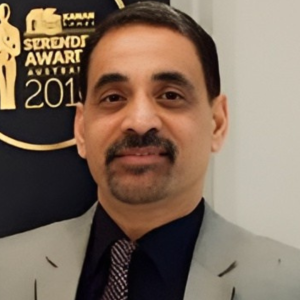
Dr. Raju Adhikari
Dr. Raju Adhikari is a leading figure in global polymer science and an influential voice in diaspora-led development. Originally from Nepal and based in Melbourne, Australia, he brings over 30 years of interdisciplinary research, industry collaboration, and community leadership.
He spent much of his career at the Commonwealth Scientific and Industrial Research Organisation (CSIRO), where he led the development of biodegradable polymers and biomedical devices. His innovations include TranspiratioNal (a biodegradable spray mulch), Synfert (a slow-release fertilizer technology), and the world’s first synthetic polymer-based heart valve approved for human trial—contributions that have received national and international acclaim. He holds 26 patents, has authored 100+ scientific publications, and collaborated across sectors from agriculture to defense to health.
Dr. Adhikari received his PhD in Organic Chemistry from the University of Delhi, where he specialized in the design and synthesis of polymeric materials. Since then, he has actively contributed to higher education as a research supervisor, examiner, and visiting academic. He continues to mentor students and researchers, fostering interdisciplinary collaboration between academia, industry, and government institutions.
In parallel, Raju has played a catalytic role in empowering diaspora engagement. He co-founded and co-chaired the Non-Resident Nepali Association (NRNA) Skill, Knowledge, and Innovation (SKI) committee and the NRNA Academy, connecting Nepali professionals worldwide to national development efforts. He currently chairs the Nepal Science Foundation Trust, fostering research culture, mentorship, and innovation in Nepal.
A lifelong advocate for multicultural equity, he has served on the Victorian Multicultural Commission’s Regional Advisory Council, South Asian Ministerial Advisory Council, and Ethnic Communities Council of Victoria. He also led or co-founded several organizations, including Help Nepal Network Australia, Nepali Association of Victoria, and Federation of Nepali Community Association (FeNCAA), amplifying voices of migrant communities.
His journey reflects a rare blend of deep science and public service—building bridges between research and real-world application, between Nepal and the world, and between innovation and inclusion. Through his work, he continues to inspire the next generation of changemakers to lead with both intellect and impact.
